
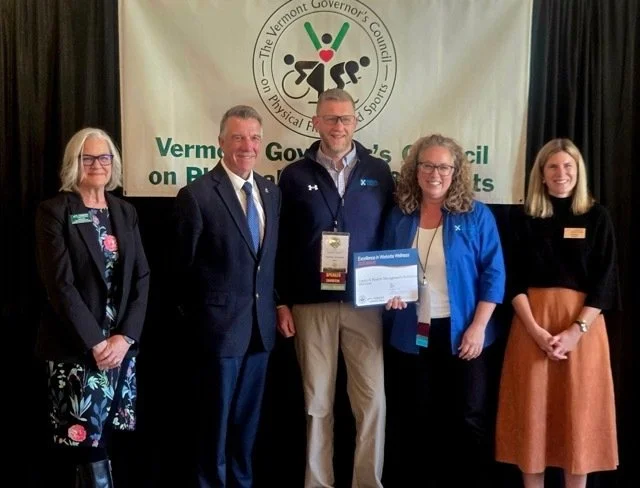
TWC Interview Erica Galipeau, PT, and Charles Alexander, OT, of IHMS
We recently sat down with Erica and Charles, co-owners of Injury & Health Management Solutions, Inc. (IHMS), to talk about injury prevention, Functional Capacity Evaluations, and what it takes to help injured workers get back on the job safely.
Q: Please share the makeup of your team.
A: Our clinical staff includes five physical therapists, one occupational therapist, three athletic trainers, one physical therapist assistant, and three administrative staff. Erica Galipeau, PT, and Charles Alexander, OT, are co-owners, and all of our staff hold additional certifications in ergonomics. Lily Devereux, DPT, along with Erica and Charles, also hold Work Capacity Evaluation certifications for Functional Capacity Evaluations (FCEs) and Work Hardening.
Q: How did you choose your profession?
A: Charles: My interest in OT stemmed from a workplace injury (hand crush) when I was 16 years old. Following that injury, I participated in hand therapy, which sparked my interest in Occupational Therapy.
Erica: I worked as a candy striper at a hospital while in high school. With that volunteer experience, I fell in love with the PT department and was intrigued with PT work.
Q: What is the most positive aspect of your role? What can be the most challenging?
A: The most positive aspect of our role is twofold. First, it is amazing to be an employer of a small business. Being able to provide staff with well-paying jobs that meet their personal and family needs, while working toward a common passion as a team, is really rewarding.
Second, being able to work with "real people, doing real work" is inspiring. We enjoy working with all levels of a company, from the CEO to HR to production workers and facilities. We've learned that the essential workers of this country really make the world go round. Our job lets us support employee safety, prevent injuries, and promote wellness with individuals who may not otherwise have these resources. This helps both the employee and the company as a whole!
The most challenging part is working with larger organizations where HR, Safety, and management all work in silos, which limits collaboration and collective improvement.
Q: What services do you provide at IHMS, and who are your customers?
A: IHMS provides a wide range of services focused on injury prevention, rehabilitation, and corporate wellness, including:
Preventative Body Maintenance (injury prevention consultations)
Job Analysis
Ergonomic Evaluations
Post-Offer Pre-Employment Screens
Training and Job Coaching
Work Hardening and Physical Therapy
Functional Capacity Evaluations (FCEs)
We serve employers throughout Vermont and upstate New York, including manufacturing companies, utilities, towns and municipalities, and office environments.
Q: What services do you offer specific to workers' compensation?
A: IHMS is the preferred PT practice for many local businesses for their employees under workers' compensation. We provide Work Hardening and Work Conditioning Programs two to five days a week for employees who need a little more support to meet their full-duty job demands. We also provide FCEs to support a safe return to work and to help with future vocational planning or disability determination and case closure.
Q: When is the optimal point for an FCE to be conducted?
A: An FCE can be appropriate at several stages of an employee's recovery. Some of these scenarios include:
After physical therapy, to help determine if additional rehabilitation (like work hardening) is needed
To support vocational rehabilitation planning with a work capacity
When a client has reached a plateau, as additional information to support an IME
When there are effort or reliability concerns that may impact return to work
Q: What is the difference between a PT program and work hardening, and when is each the right referral?
A: Physical therapy is often the first layer of rehabilitation after an injury, and in most cases it's enough to allow an injured worker to return to work safely. PT focuses on regaining mobility and improving strength, typically in 45-60 minute sessions, one to three times per week.
In some cases, injured workers need additional support to physically meet their job demands. A Work Hardening Program runs two to four hours per day and helps employees maximize their strength, optimize body mechanics, and improve work endurance while practicing active strategies to manage residual discomfort. Employees practice performing actual work tasks through simulation, which maximizes their success when they return to work.
Q: How do you receive referrals?
A: For rehabilitation, we receive referrals through companies we already work with onsite, occupational medicine clinics, family physicians, vocational rehabilitation counselors, and attorneys. For our company-related work, most of our contacts come from our presence in the community: word of mouth, contacts changing jobs, and engagements at conferences.
Q: What preventative strategies do you suggest to employers and employees?
A: It's really important for employers to understand the physical demands of the job and to make sure they hire employees who can actually perform those duties. It's equally important for employees to understand why injuries occur and how to use their bodies safely.
Q: Please share your favorite success story.
A: One of our favorites involves an FCE for a nurse who was referred because of roadblocks in her case. She had been successful in PT and met all of her job demands in a work hardening program at another facility. Unfortunately, she then had two failed return-to-work attempts. She was extremely passionate about returning to full duty as an ER nurse, and not being able to do so was affecting her both physically and emotionally.
The FCE showed that she had the strength to perform all of her job tasks. It also revealed that when the pace quickened, as it does in the ER, she struggled to carry over the body mechanics and pain management strategies she had learned in PT and work hardening. That finding allowed us to develop a plan for onsite job coaching to bridge the gap between her rehabilitation and her actual job demands. The result was a successful return to work.